About
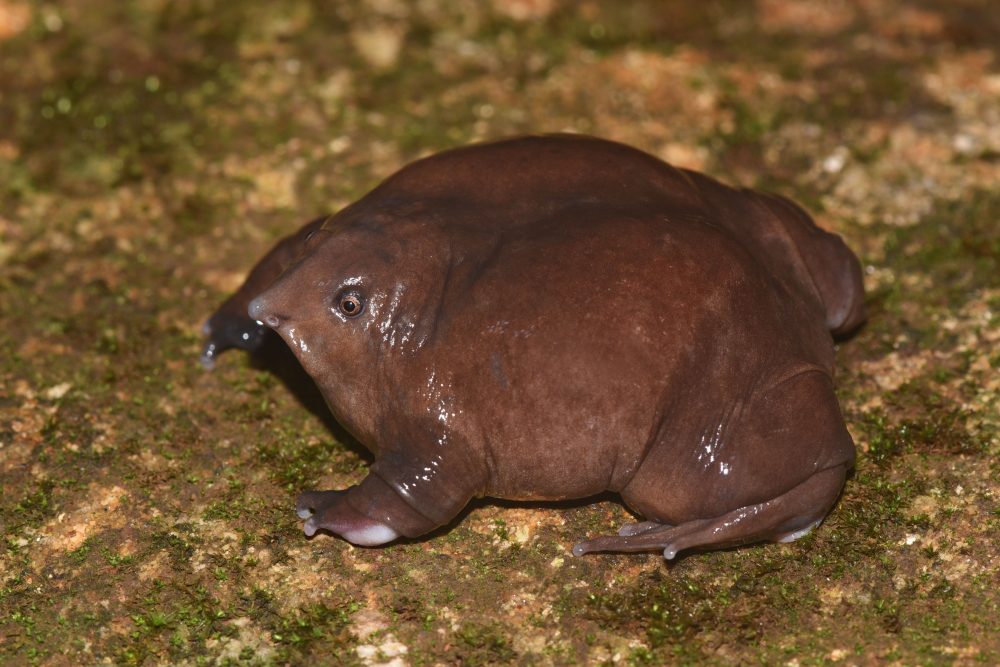
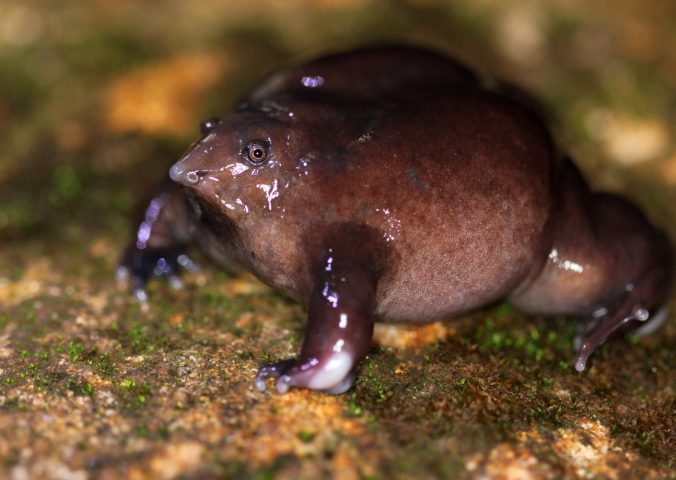
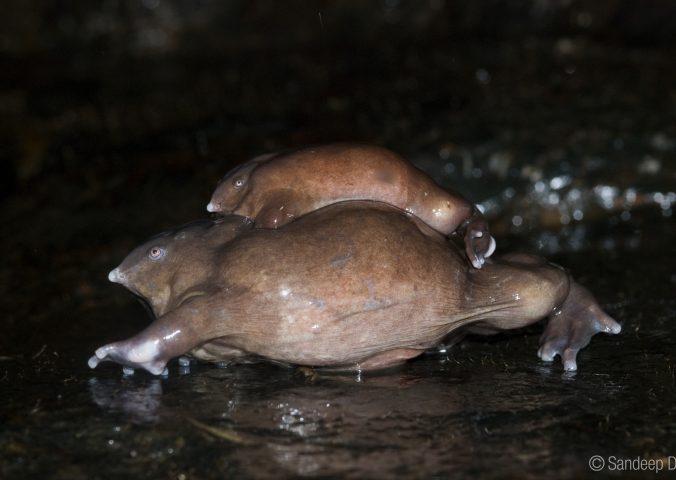
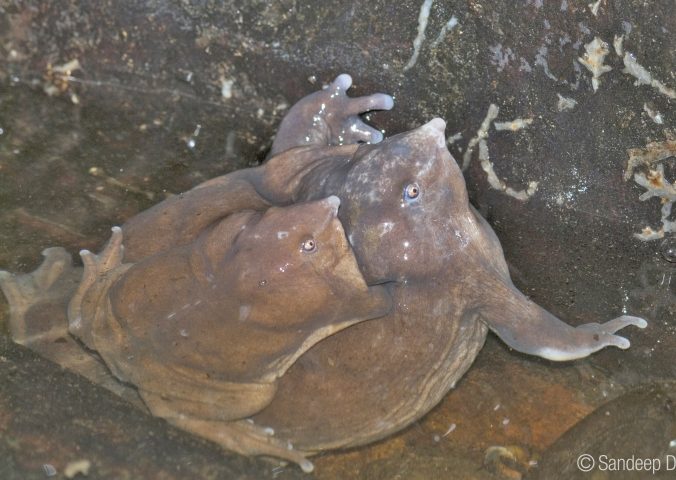
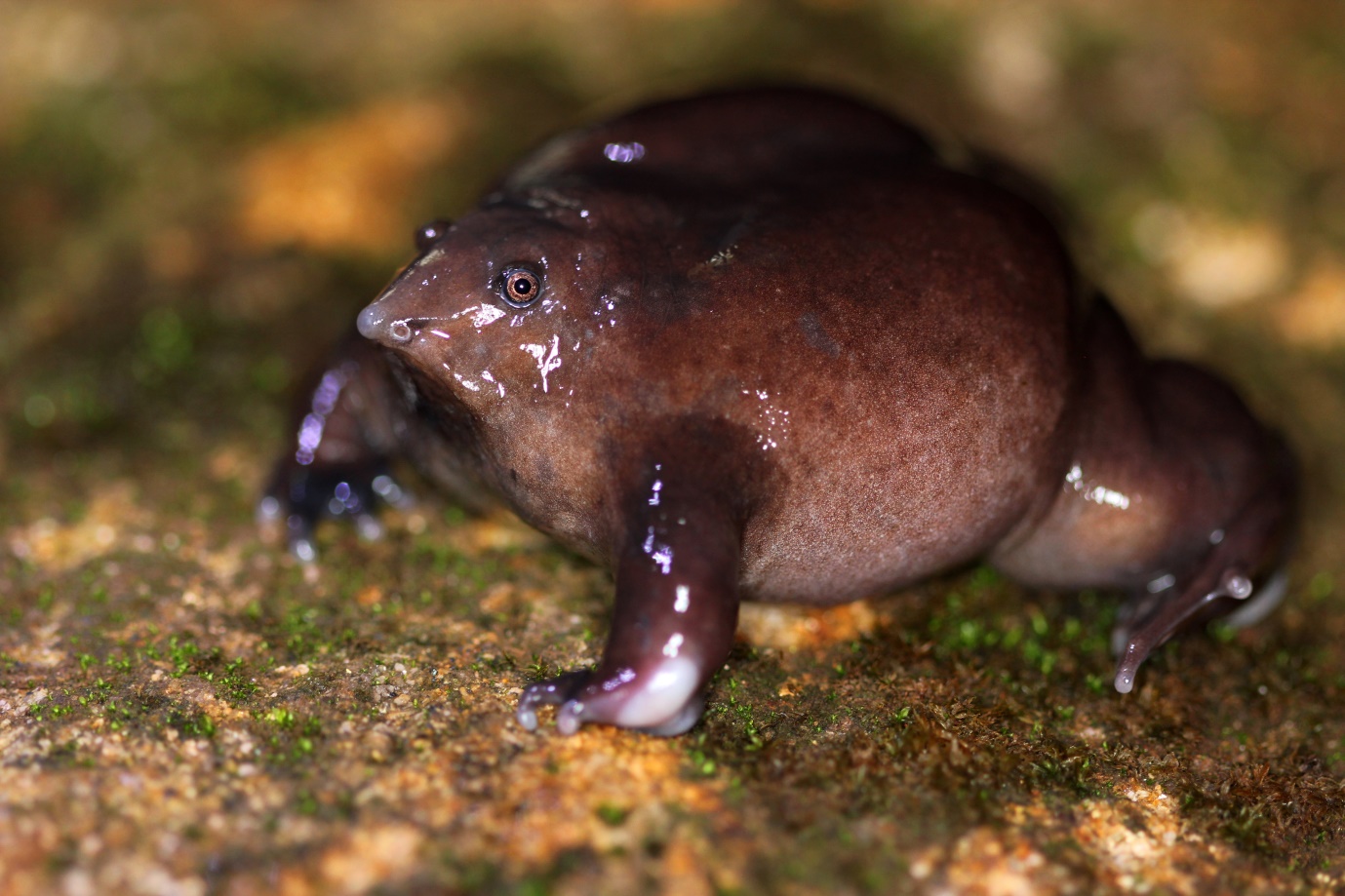
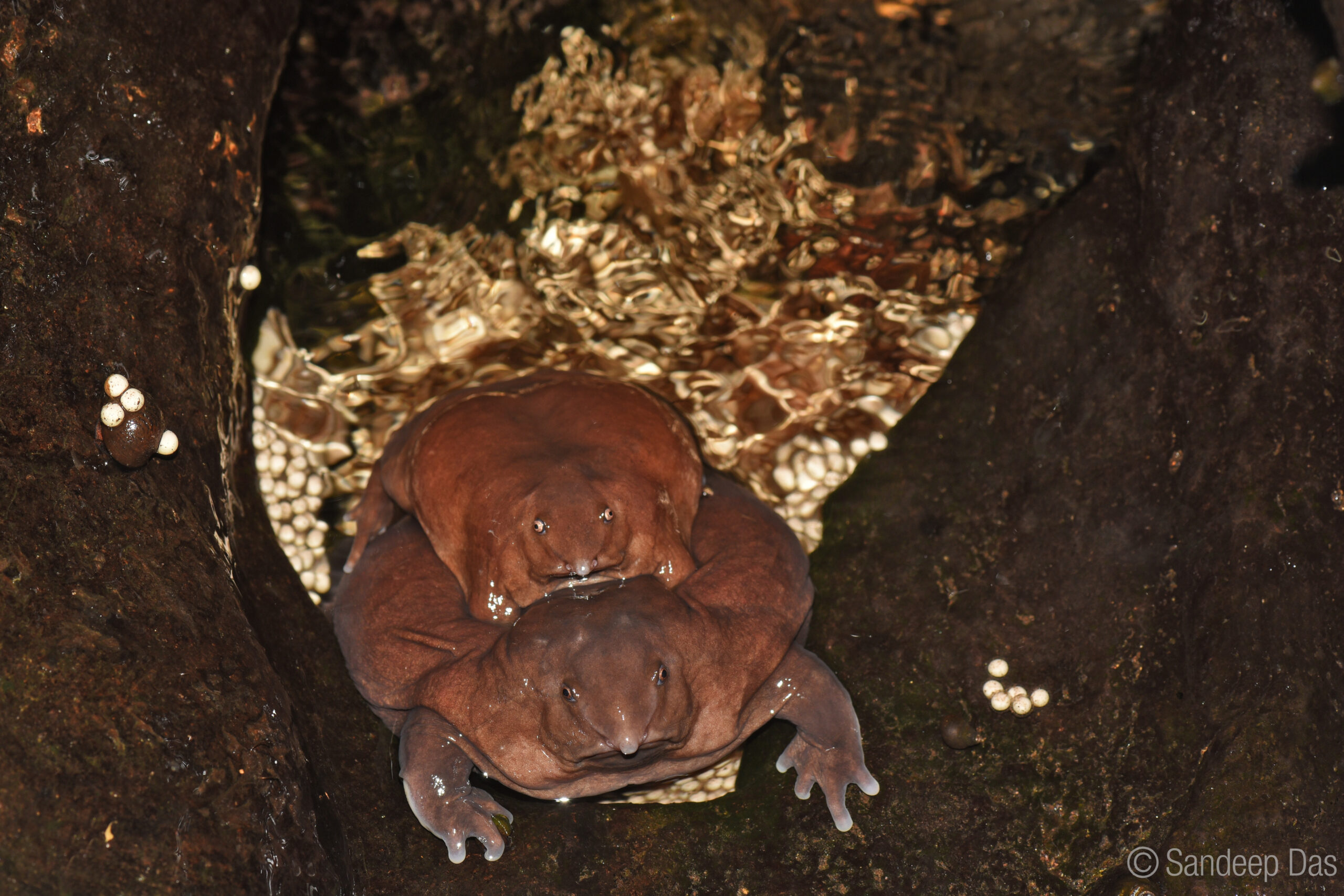
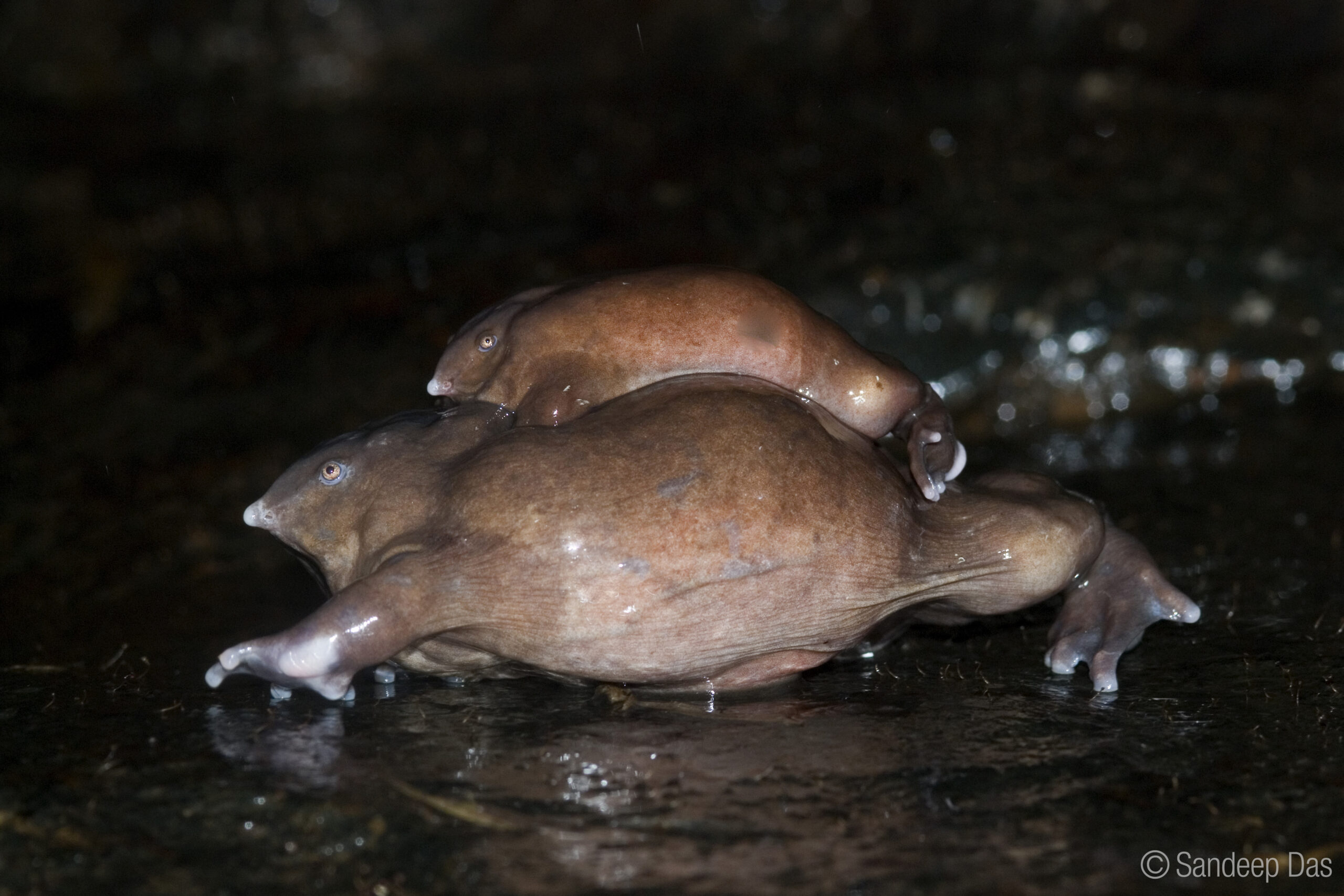
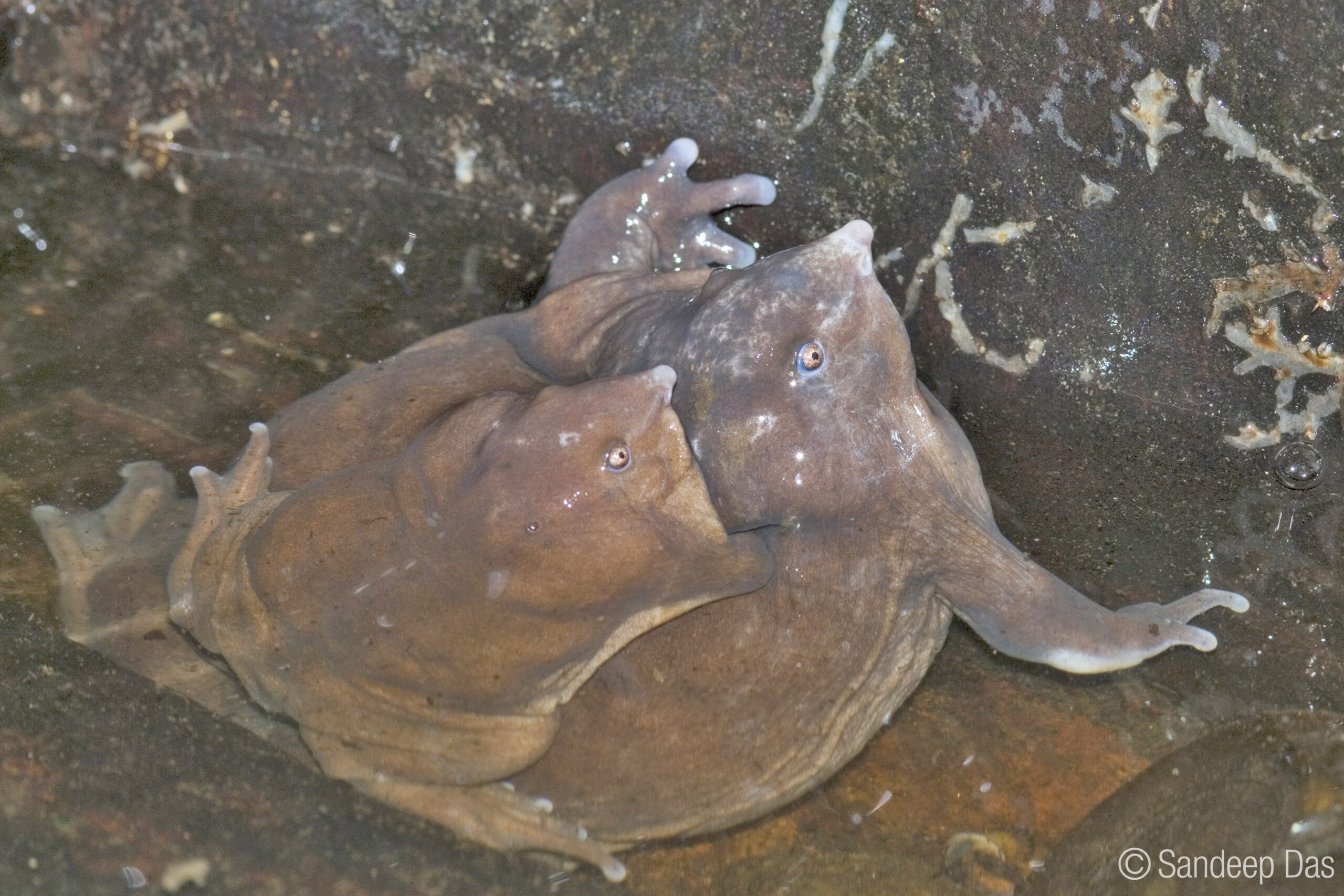
The purple frog (or pig-nosed frog) spends much of its life underground, emerging briefly for a few days each year at the start of the monsoons to breed.
The purple frog is one of only two species in the family Nasikabatrachidae. This family is endemic to the Western Ghats of India and has been evolving independently for around 100 million years. Molecular evidence has found the purple frogs to be most closely related to a family of tiny frogs only found on the Seychelles. It is thought the two families shared a common ancestor that was subsequently isolated on different landmasses following the break up of the supercontinent Gondwana.
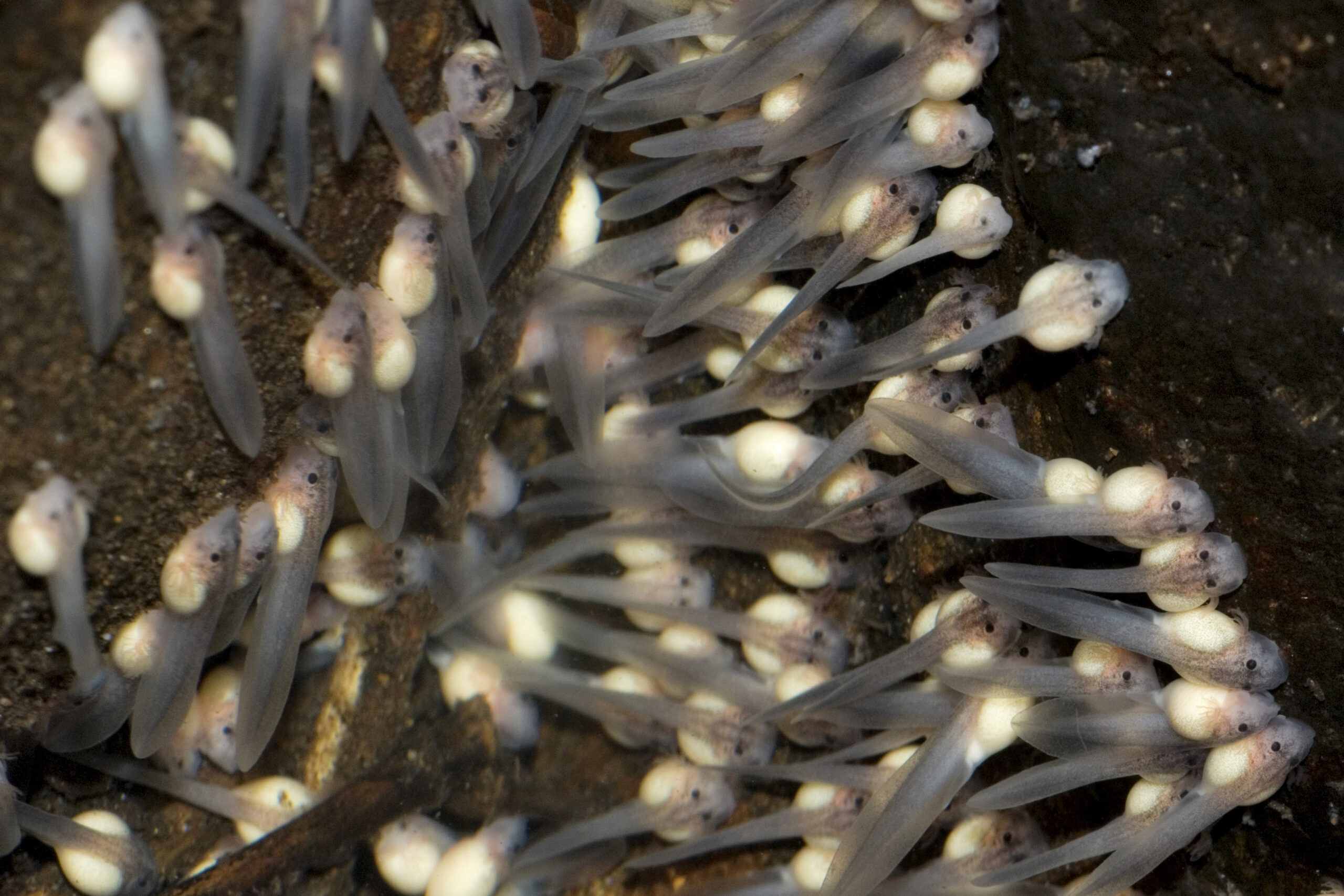
As it is a fossorial (burrowing) species, the purple frog was long overlooked by science, being formally described in only 2003, despite already having a number of local names. The tadpoles are adapted to living in torrents and have specialised sucker-like mouthparts which they use to cling onto the algae covered rocks where they feed. Local people consume the tadpoles, which are also used alongside the adult frogs for medicinal purposes. In some communities, an amulet is made from the frog and is worn by children as it is believed this will reduce their fear of storms.
The purple frog is listed as Endangered by the IUCN Red List, and is threatened by deforestation from expanding cultivation, in addition to consumption and harvesting by local communities. Little is known about this species, but it has very specific breeding sites. Its specialised breeding biology makes it vulnerable to habitat loss and change. The majority of locations where the purple frog is found occur outside the protected area network and some breeding sites have been damaged by the construction of check dams which aim to control water flow during heavy monsoons.
- Order: Anura
- Family: Nasikabatrachidae
- Population: Unknown
- Trend: decreasing
- Size: 6-9cm
- Weight: 165g
EDGE Score
Distribution
The purple frog is restricted to the Western Ghats of India, it has been reported from several locations in Kerala and a single location in Tamil Nadu. It has been recorded within protected areas including Anamalai Tiger Reserve, Periyar Tiger Reserve and Silent Valley national Park.
Habitat and Ecology
This species requires loose, damp aerated soil in areas with good canopy cover and occurs at low elevation sites below 1,000 m above sea level.
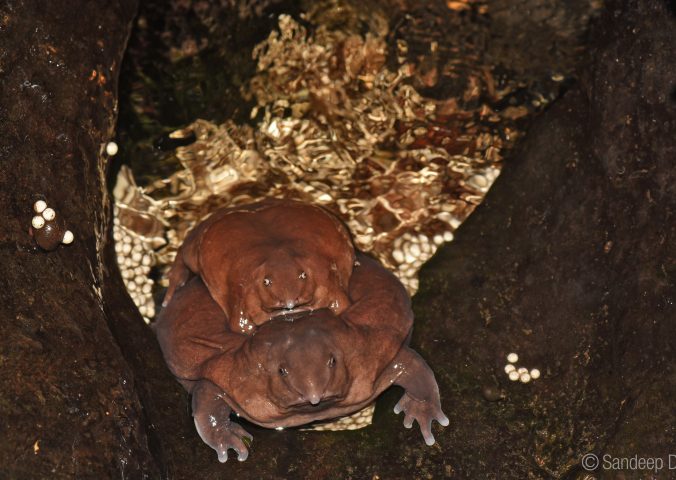
The purple frog emerges at the start of the monsoon to breed, laying its eggs in small shaded rocky pools in the bed rock of torrential streams. Tadpoles take approximately 100 days to metamorphose. Adult purple frogs feed on small invertebrates, primarily termites.
The purple frogs fossorial (burrowing) lifestyle makes it incredibly difficult to study, there are no current estimates of population sizes.