51. Muennink's spiny rat (Tokudaia muenninki) CR
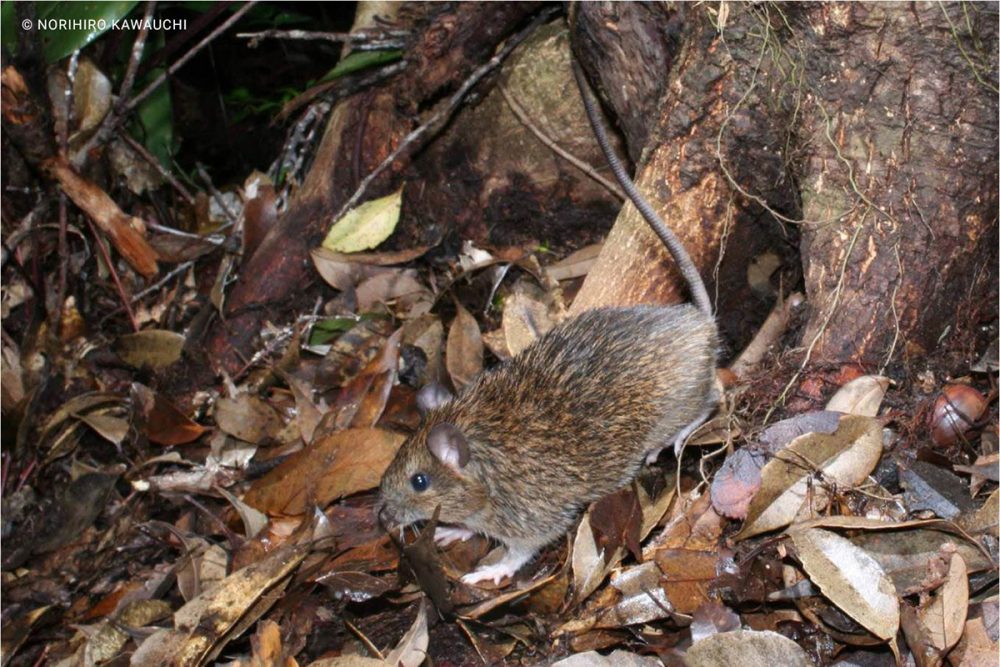
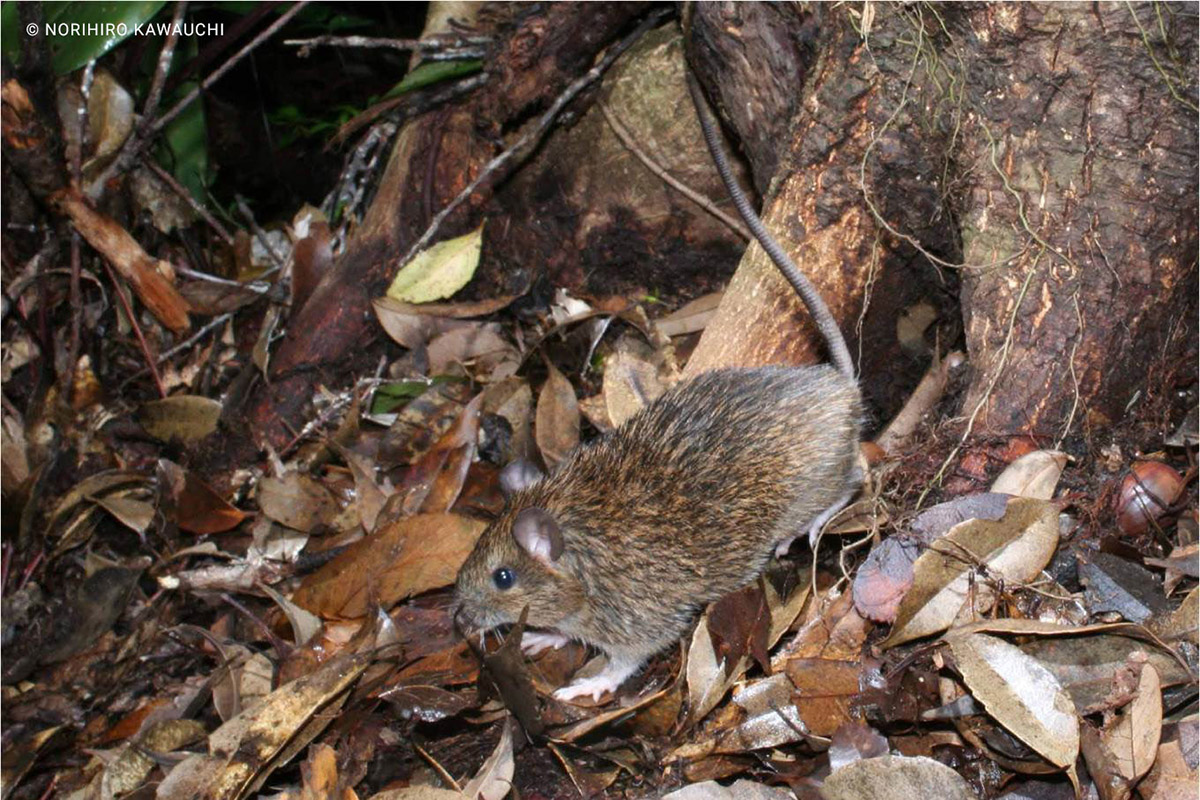
Resembling a large vole, the spiny rat has grooved spines protruding from its short, thick body fur. Very little is known about the species. It occurs in temperate forests and has an extremely limited distribution. Although the major threats are unknown it is believed to be highly threatened due to the deterioration of its natural habitat.
Urgent Conservation Actions
No official conservation recommendations have been made for this species.
Distribution
Okinawa, Japanese Ryukyu Islands.
 
<< Previous: Hairy-eared dwarf lemur Next: Small-toothed mole >>
Evolutionary Distinctiveness
Order: Rodentia
Family: Muridae
The family Muridae (rats, mice and gerbils) is the largest mammalian family, comprising some 730 species in 150 genera. The family dates back to the Oligocene (26-38 million years ago) of North America. The family is thought to have undergone extensive adaptive radiation during the Miocene Epoch (26-7 million years ago). Murid rodents are a highly successful group. They tend to be adapted for early and prolific reproduction ('r-selected') rather than for long individual life spans. Members of the group are found throughout the world, in almost every terrestrial habitat. Muennink’s spiny rat belongs to the subfamily Murinae (Old World rats and mice). This group includes 561 species, and is among the most successful of all mammals in terms of ability to survive, multiply and adapt quickly. The Murinae probably originated in southeast Asia in the late Oligocne or early Eocene (25-20 million years ago). The earliest fossils are known from Spain about 6-8 million years ago. There are just two species in the genus Tokudaia: T. muenninki (Muennink’s spiny rat) and T. osimensis (Ryukyu spiny rat). T. muennicki is known from late Pleistocene or early Holocene fossils from Okinawa and nearby Le Island in the Ryukyus.
Description
Size: 
Head and body length: 120-175 mm
Tail length: 100-125 mm
Weight: Unknown
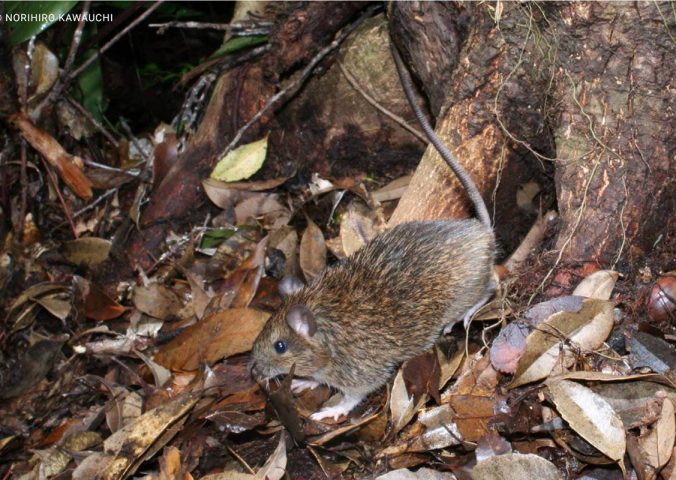
This species resembles a large vole. It has a short thick body and dense fur, consisting of fine hairs and coarse, grooved spines (hence the common name “spiny rat”). The fur is brownish above and greyish white below with a faint orange tinge. The spines on the animal’s back are black throughout while the spines underneath are usually white with a rufous tip. The spines cover the body except for the regions around the mouth, ears, feet and tail. The tail is bicoloured for its entire length.
Ecology
Very little is known about the ecology of this species.
Habitat
Temperate forests. The United States Museum of Natural History in Washington D.C. holds 13 specimens of this poorly known species, which were collected from thick shrubby forest with an undergrowth of coarse grasses and brake ferns.
Distribution
Known from Okinawa in the Japanese Ryukyu Islands.
Population Estimate
Unknown, although numbers are thought to be very low.
Population Trend
Unknown.
Status
Classified as Critically Endangered (CR A1c, B1+2c) on the 2006 IUCN Red List of Threatened Species.
Threats
The major threats to this species are unknown. It occurs in limited areas of natural habitat that is expected to continue to deteriorate.
Conservation Underway
This species is legally protected, although there do not appear to be any specific conservation measures in place.
Conservation Proposed
No official conservation recommendations have been made for this species.
References
Ishii, N. 2000. Tokudaia muenninki. In: IUCN 2006. 2006 IUCN Red List of Threatened Species. Downloaded on 01 December 2006.

Nowak, R.M. 1999. Walker's Mammals of the World. Sixth edition. The Johns Hopkins University Press, Baltimore and London.
Distribution map based on data provided by the IUCN Global Mammal Assessment.

if you can provide new information to update this species account or to correct any errors, please email us at info@edgeofexistence.org


Forum comments

There are as yet no comments for this species.

Add a comment

You must log in to post. If you don't have a login, it's easy to register.