Wongibe Dieudonne
- Project name: Community Guardianship for Endangered Sharks and Rays along the Cameroon Coastline
- Project site: Artisanal fisheries and coastal communities around Douala, Limbe and Kribi, Cameroon
- EDGE species: Scalloped Hammerhead (Sphyrna lewini) and Blackchin Guitarfish (Glaucostegus cemiculus)
- Active: 2026 - ongoing
Biography
Wongibe Dieudonne is a Cameroonian marine and freshwater conservation biologist and PhD researcher at the University of Bamenda, College of Technology. He holds an MSc in Ecology (Wildlife Resource Management), from the University of Dschang, Cameroon. His early work on the African manatee examined the links between fishing practices, bycatch of protected species, and conflict with fishers’ livelihoods. He previously volunteered with African Marine Conservation Organisation (AMCO) in community engagement, ecological surveys and monitoring. He is a field ecologist and research assistant with Boz Life Science Research & Teaching Institute (Boz Institute), where he focuses on ecological surveys, environmental DNA, metabolomics, transcriptomics, and bioinformatics.
Seeing threatened sharks and rays sold far inland brought new urgency to Wongibe’s work. He is committed to conservation that treats coastal communities as partners and recognises their dependence on healthy fisheries. Through the Fellowship, he aims to strengthen his skills in elasmobranch research, spatial ecology, fisheries management, stakeholder negotiation, and the translation of evidence into national policy.
EDGE Project
Scalloped Hammerheads and Blackchin Guitarfish are among the sharks and rays caught in Cameroon’s extensive artisanal gillnet fisheries. Their slow growth and low reproductive rates make them especially vulnerable to bycatch and overfishing, yet limited local data make it difficult to design effective measures that also respect the needs of fishing communities. Nursery areas may be particularly important, but their locations and use are poorly documented.
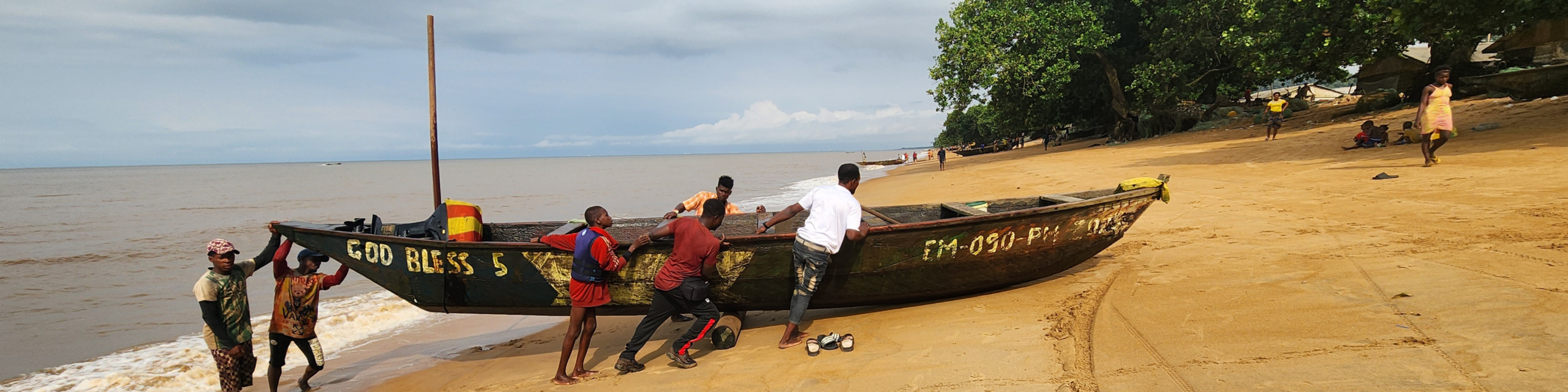
Wongibe will work at landing sites and with fishers around Douala, Limbe and Kribi to establish a baseline for catches, fishing effort, species composition and the size and sex of landed animals. Household research will assess how livelihoods and food security depend on fisheries and shark and ray products. Participatory mapping with fishers will identify possible nursery grounds, which the team will then investigate while keeping sensitive locations confidential.
The project will also test LED-illuminated gillnets against standard nets to determine whether they can reduce bycatch without undermining commercially important catches. Local community monitors will be trained to continue collecting data, and findings will be shared through community meetings, a national workshop and a policy brief. This combination of ecological, economic and practical evidence will help communities and government partners develop workable, locally grounded approaches to shark and ray conservation.