
Of all animal classes, it is the amphibians that face the greatest risk to imminent extinction. Why? Batrachochytrium dendrobatidis. This virulent fungal disease is not only a mouthful to pronounce but also a very important chytrid fungus, which causes the disease chytridiomycosis now infecting most of the world’s amphibians. Only discovered in 1998 the amphibian conservation action plan (2007) recently described chytridiomycosis as “the worst infectious disease ever recorded among vertebrates in terms of the number of species impacted, and it’s propensity to drive them to extinction.” The disease has been linked with several rapid declines in populations as well as some extinction events. For once habitat loss, overexploitation and other usual threats have been overshadowed.
But, while the importance of managing this chytrid fungus is evident, addressing the threat of chytridiomycosis in wild populations is not an easy task. Many of the most devastating incidences of the infection have occurred in largely unspoilt or protected areas, such as rain forest reserves in Australia and Central America. Therefore, traditional methods of protecting species such as introducing protective legislation or territory might not be so effective when combating the threat posed by this fungal infection. Attempts have been made to eradicate chytridiomycosis from some wild populations but to date efforts have not been successful.
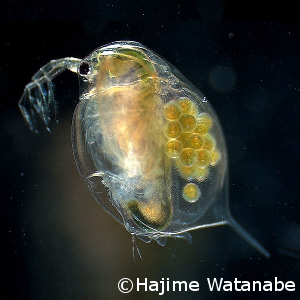 Enter a new alternative: the biological control, Daphnia. Researchers at Oregon State University have discovered that a species of water flea (Daphnia magna) feeds on the infectious stage of the chytrid fungus. The Daphnia, a freshwater zooplankton, consumes the zoospore or the free-swimming stage of the “chytrid” fungus. The researchers propose that biocontrol is the best bet for controlling the fungal infection and Daphnia could, given their results, be the right control agent. They suggest that the microorganism could help reduce the density of the free swimming stage of the fungus enough to enable the amphibians to fight infection. No one has so far attempted biocontrol of Batrachochytrium dendrobatidis
With one third of the amphibians in the world threatened and many extinct. There is little time to waste, but biological control has not always had a great success rate. In several cases it has had a devastating effect in the environment such as the case of cane toads in Australia. Will biological control through Daphnia be the secret weapon against the fungal attach?
Read the original research by Buck et al at Oregon State University here