|
|||||||
|
|||||||
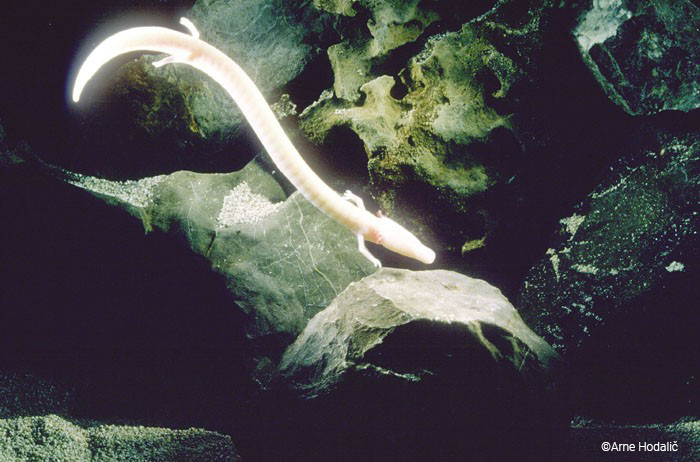
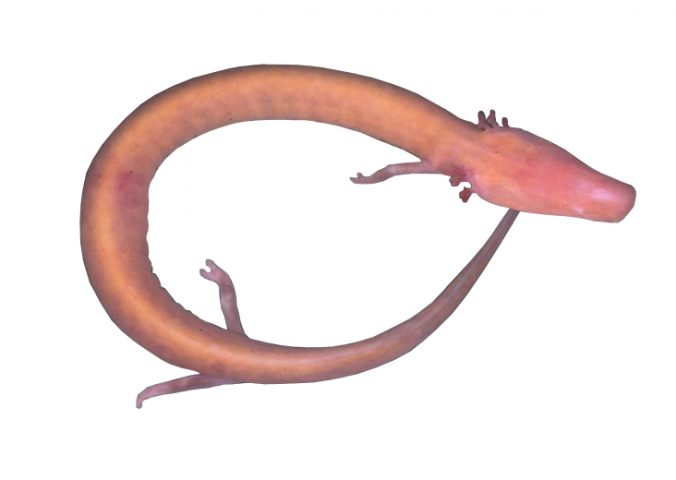
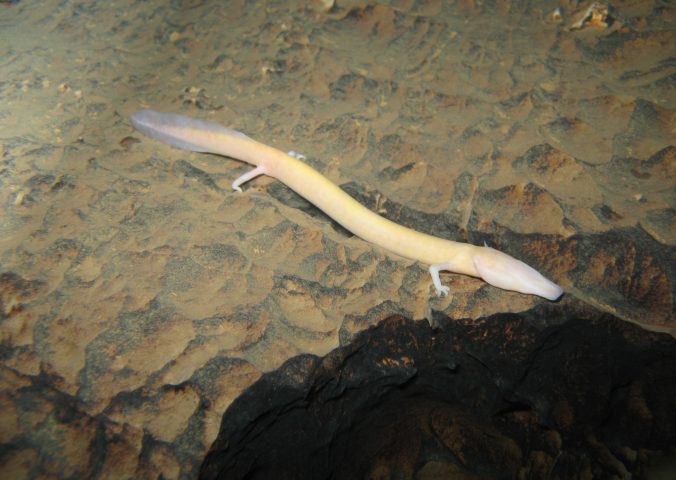
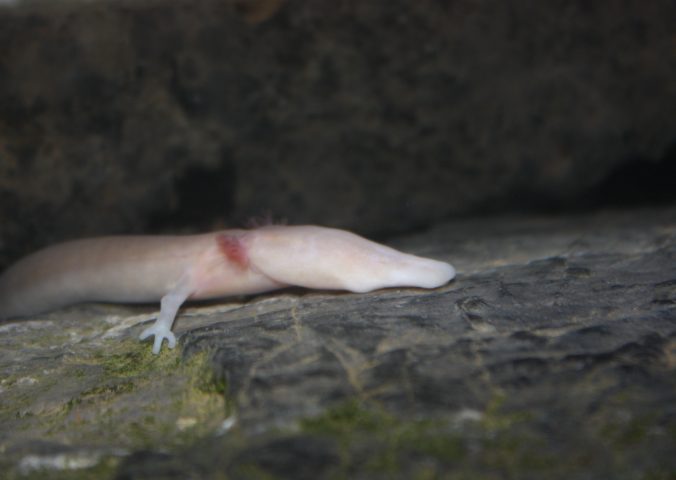
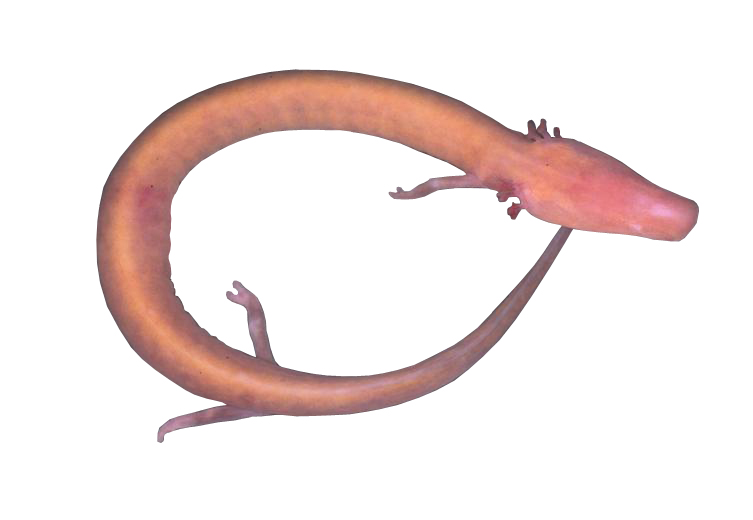
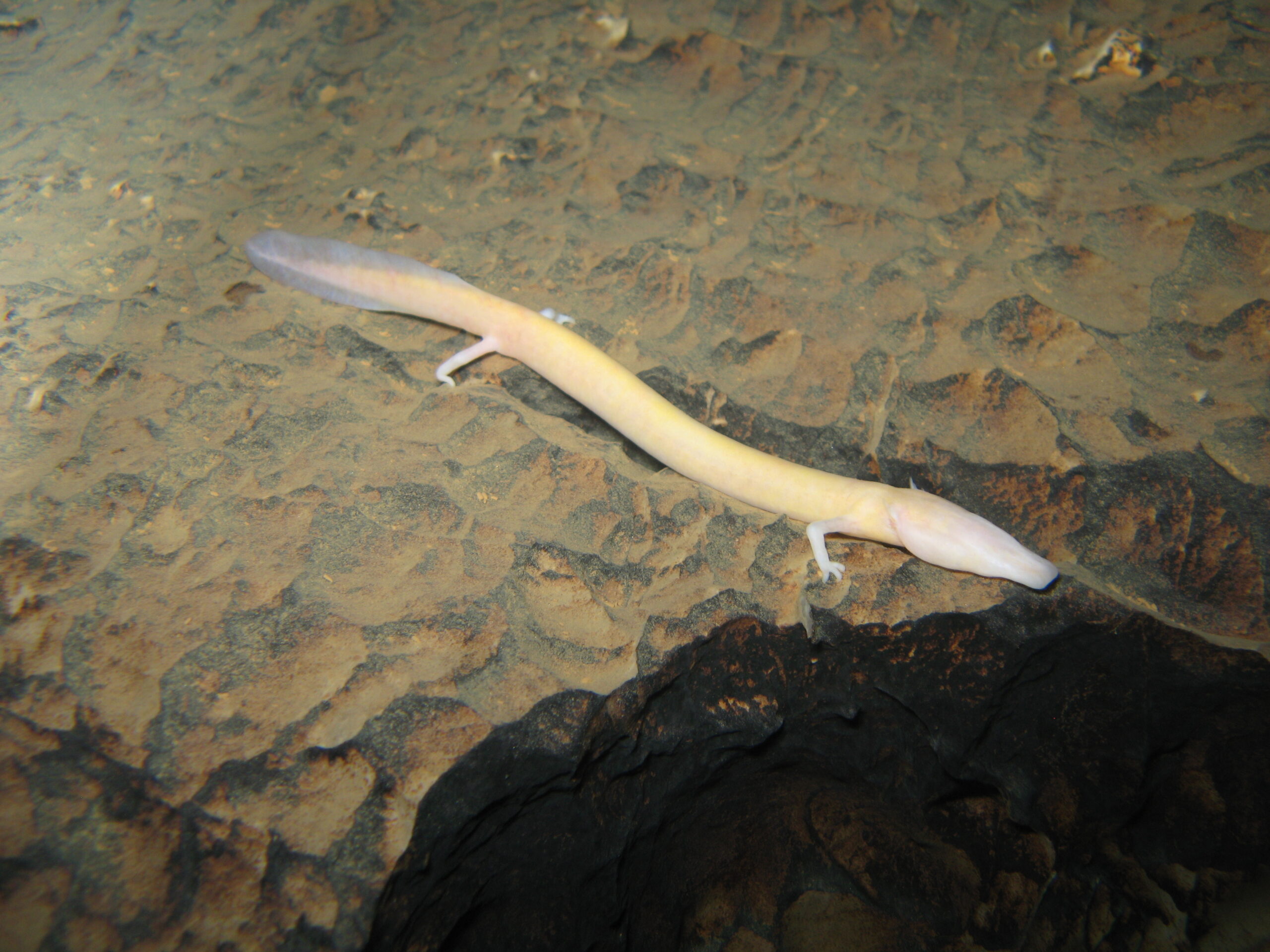
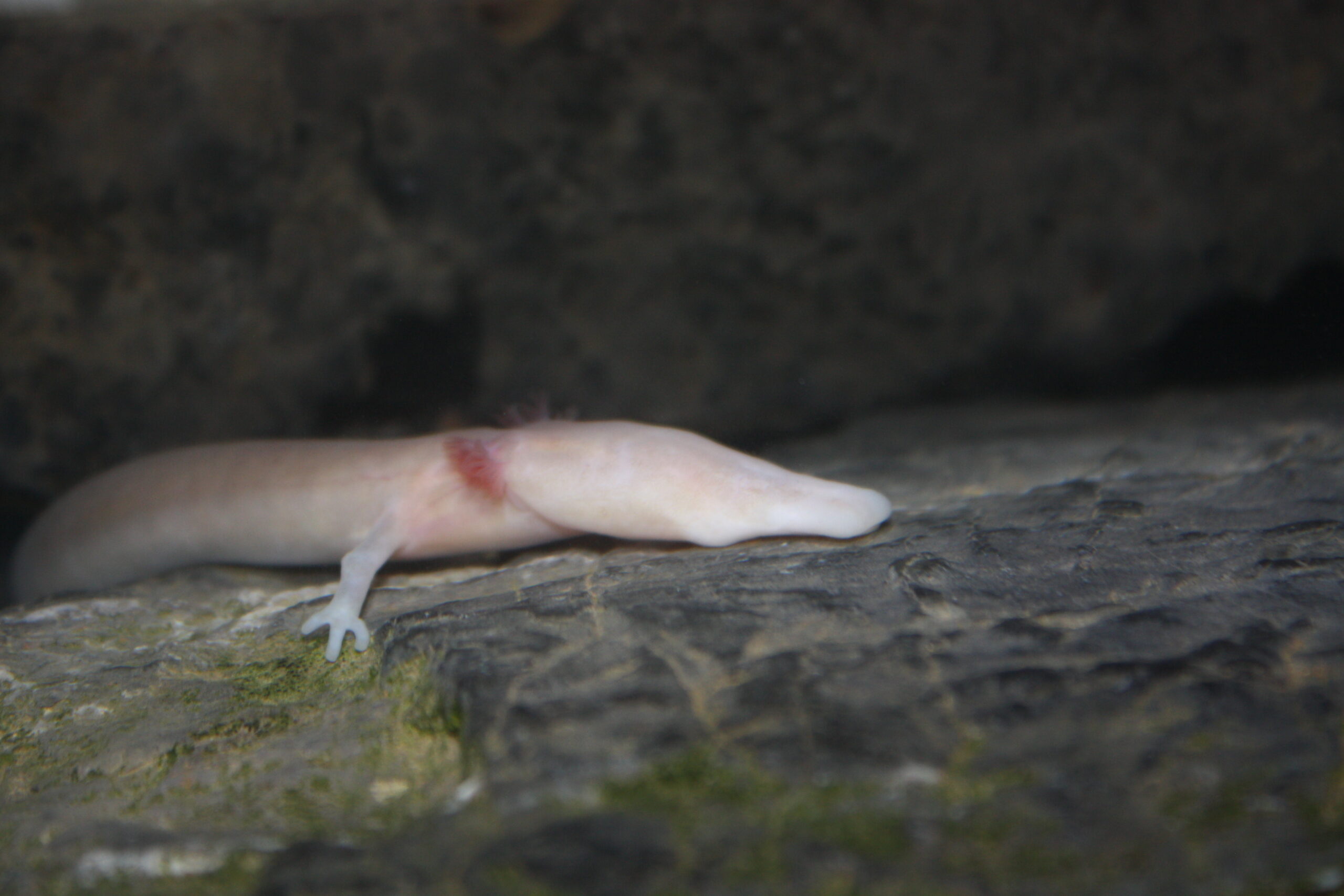
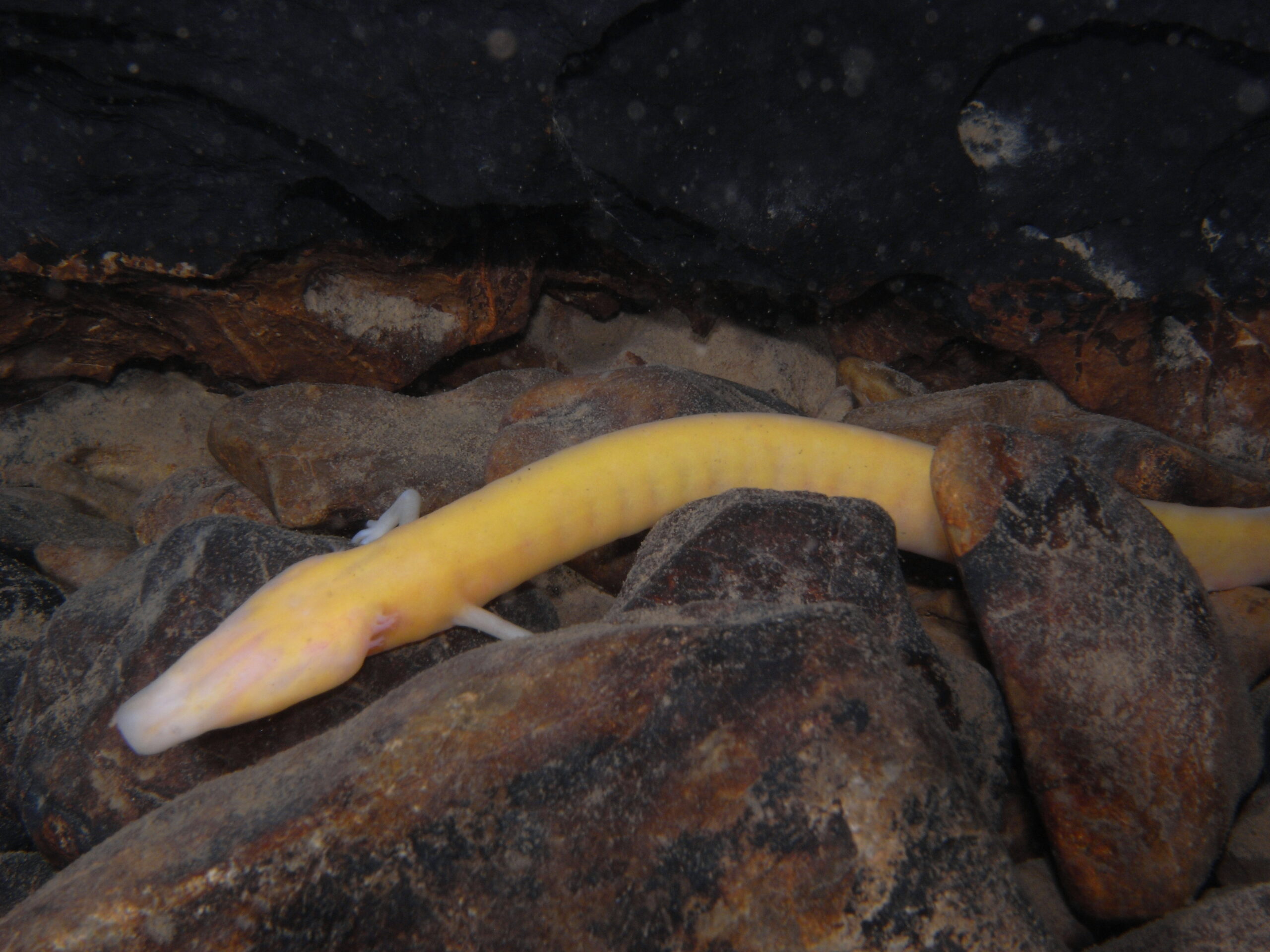
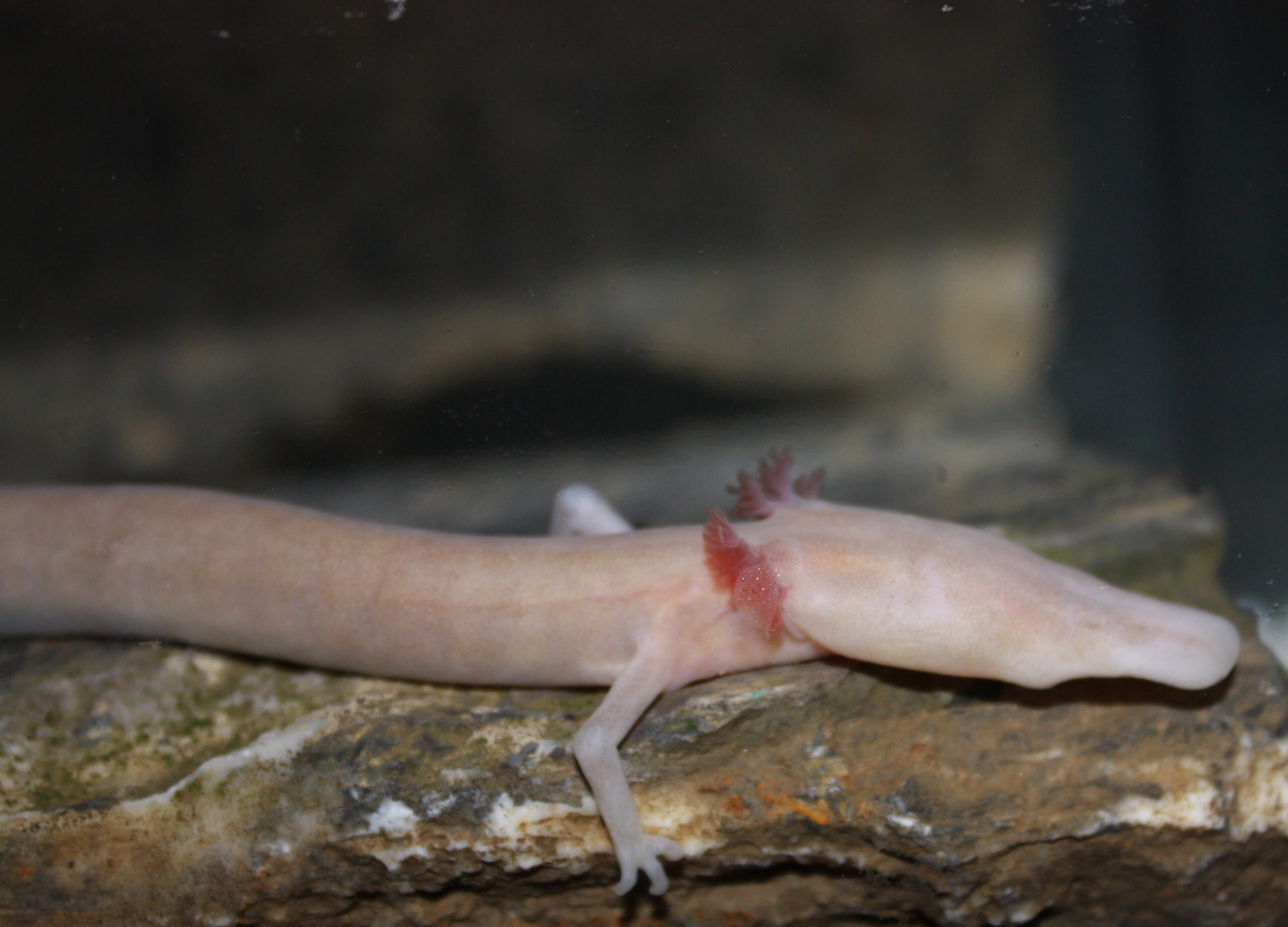
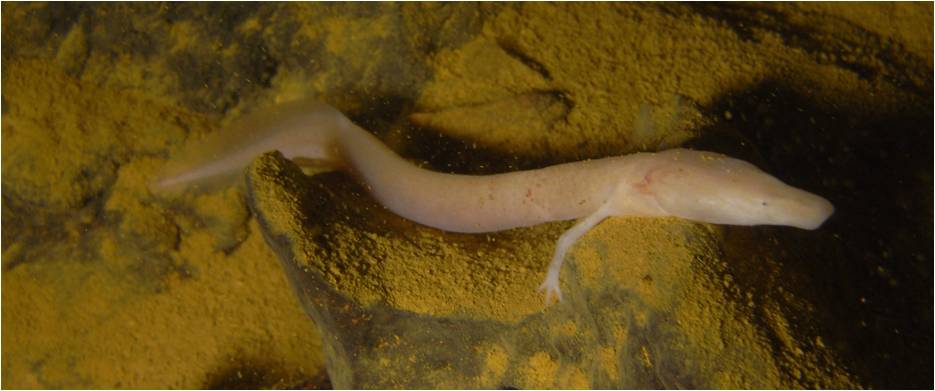
The olm is the only cave-adapted vertebrate with a range restricted to Europe and has numerous adaptation to its entirely aquatic (or water-dwelling) underground life. This species inhabits a world without light, and as a consequence has poorly developed eyes and no skin pigmentation. Although the eyes are regressed, they retain sensitivity to light despite lying deep below the skin and rarely being visible except in some younger adults. Larvae have normal eyes, but development soon stops and the eyes start to diminish, finally atrophying after about four months. Other light-sensitive areas of the olm’s body include a “pineal body” in the centre of the head, and even the skin registers light through the proposed presence of the photosensitive pigment melanopsin inside specialised cells called melanophores. However, since no light penetrates into the cave system, this light sensitivity is seldom, if ever, used.
In place of sight, the olm has developed an acute sensory system for hunting in the dark. The front part of the olm's head carries sensitive chemo-, mechano-, and electroreceptors. Olms have one of the best senses of smell of any amphibian, and are capable of sensing very low concentrations of organic compounds in the water through both smell and taste. The ear is specialised to receive sound waves in the water, as well as vibrations from the ground. Experiments indicate that the optimal hearing sensitivity of this species between 10 Hz-15,000 Hz. A pressure-senistive sensory system running along the body (common in fish) called the lateral line system supplements inner ear sensitivity by registering tiny nearby water displacements. Furthermore, olms have the ability to detect weak electric fields through sensors called “ampullary organs” in the head. This means they have a electrosensitve sixth sense, similar to that employed by sharks. Also, some behavioral experiments suggest that the olm may be able to use the earth's magnetic field to orient itself, as has recently been found to align itself with natural and artificially modified magnetic fields.
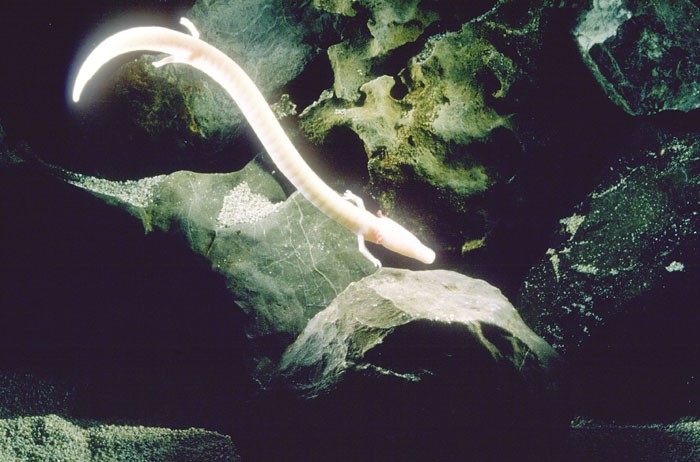
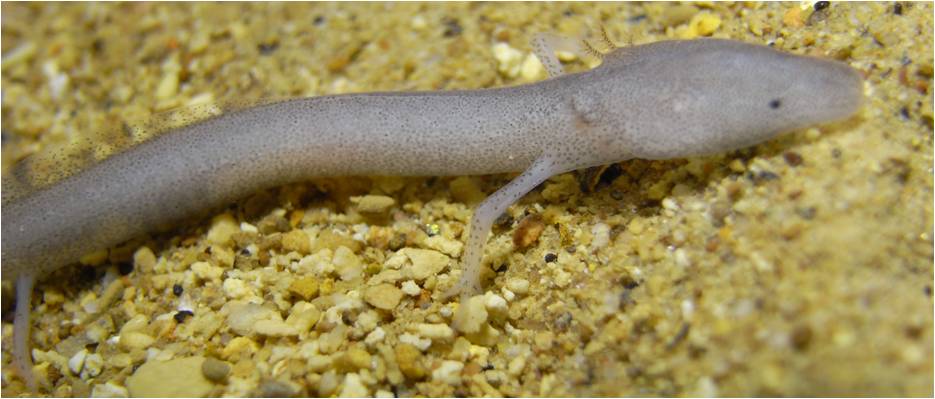
The species generally occurs in large subterranean aquatic karst systems formed in limestone and dolomite rocks, and may be found in cave entrances (especially during episodes of high rainfall and flooding) and abandoned mine workings. Many of the caves that the species occurs in are connected to rivers that run above ground for the first 50 to 100 km and then disappear into the ground. Populations may be found close to the surface or as much as 300 m underground depending on the thickness of the Karstic formation. Olms hide in crevices or bottom sediment when disturbed, and are generally found in water temperatures from 6ºC to 12ºC, although the pigmented subspecies P. anguinus parkelj (the “black olm”) prefers in warmer surface waters. The black olm was first discovered in 1986 in the Dobli?ice karst spring near ?rnomelj, Slovenia, in an area smaller than 100 square kilometres. It is very different from the obligate cave-dwelling “white” olm, in that its skin is fully pigmented (black or brown), it has small but functional eyes, and its non sight-related sensory system is more insensitive.
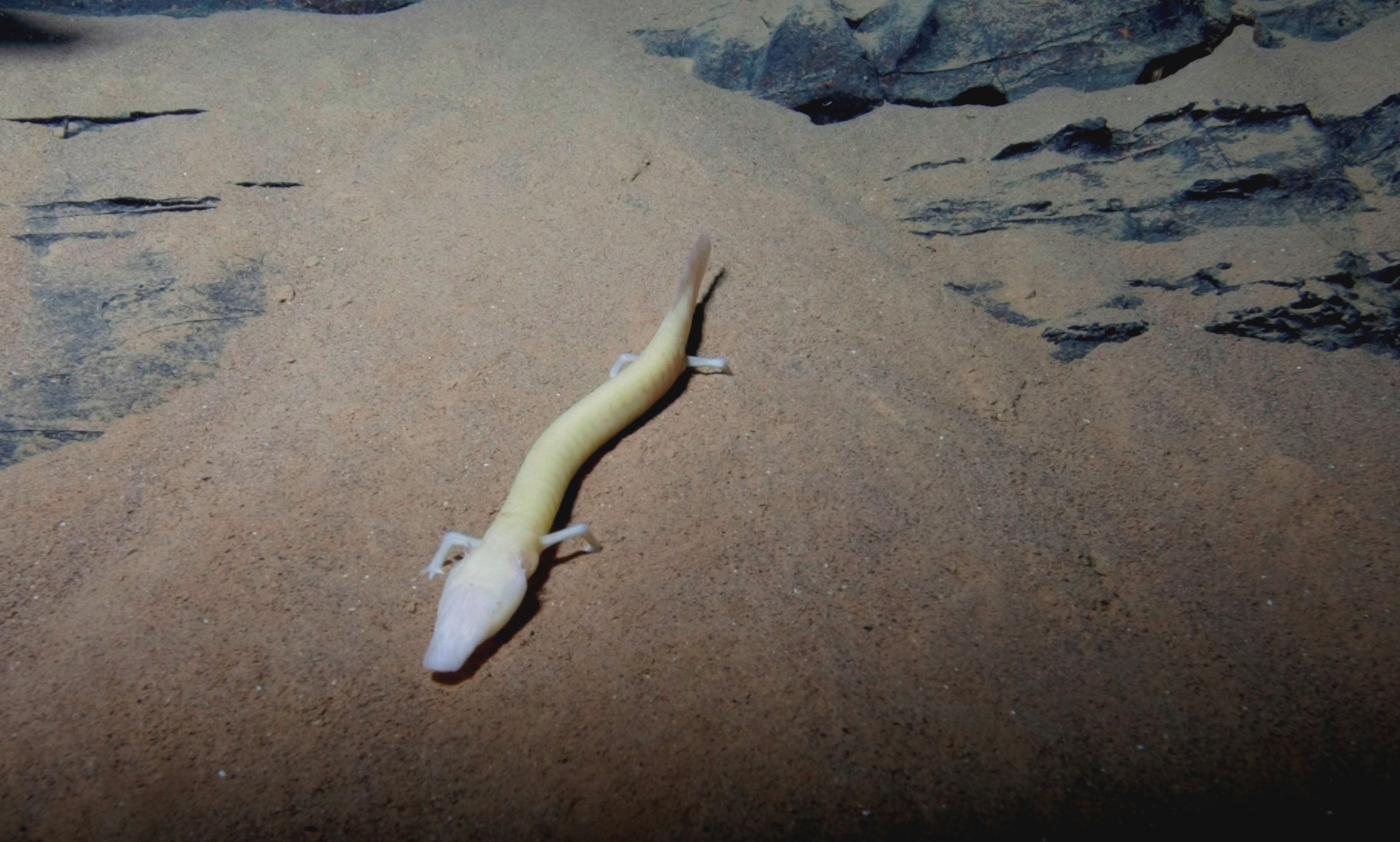
Olms feed on detritus and endemic cave invertebrates, such as crabs, snails and insects, swallowing its prey whole. The olm is a master of starvation. It can consume large amounts of food at once, and store nutrients as large deposits of fats and sugar (as glycogen) in the liver. When food is scarce, olms reduce their activity and metabolic rate, and can reabsorb their own body tissues during severe food shortages. Captive experiements have shown that olms can survive for up to 10 years without food. This is a long-lived species, with a maximum longevity of up to 58 years or more, and sexually maturity if not achieved until the age of 7-12 years. Anecdotal evidence suggests that olms can in fact live for more than 100 years. The olm swims by serpentine (or snake-like) undulation of the body, rather like an eel. Most observations on the life history of this salamander were made in captivity and they have been bred in the Subterranean Laboratory of the CNRS, in the French Pyrenees, since 1955.
This species reproduces very slowly. Adults aggregate in suitable areas such as cracks and under rocks. The males establish a territory when breeding, which is furiously defended against competing males. When a female enters such a territory, the courtship commences. The male fans with his tail in the direction of the female's head (possibly even secreting a female-attracting pheromone) and touches the female's cloaca (reproductive urinogenital opening) with his snout. The female then touches the male's cloaca with her snout and then follows the male who walks 50-100 mm forward and deposits a spermatophore (a small packet of sperm). The pair then moves forward again until the female can take up the spermatophore with her cloaca. Courtship may be repeated several times within a few hours. After leaving the male's territory, the female establishes her own egg-laying territory. After 2-3 days the female starts to lay eggs and can continue doing so for up to 25 days, laying a total of up to 70 eggs under rocks. The eggs are then guarded by the female until they hatch. The rate of egg development is dependent upon water temperature: eggs develop in 182 days at 8ºC; in 123 days at 11ºC; and in 86 days at 15ºC. The development of larvae is also highly temperature-dependent. The larvae are 20 mm long when they hatch and live on yolk stored in the cells of their digestive tract for a month. In some cases the eggs are retained within the body and two fully-formed young are produced, and it has been hypothesised that female olms give birth to live young at lower temperatures and lay eggs at higher temperatures. However, but rigorous observations have not confirmed this idea.
There is no clear metamorphosis, as the olm is a neotenic salamander retaining larval characteristics, such as gills and a tail fin, throughout its life. In other amphibians, metamorphosis is regulated by a hormone called thyroxine, produced by the thyroid gland. The thyroid is normally developed and functioning in the olm, so the lack of metamorphosis is due to the unresponsiveness of key tissues to thyroxine. Olms are social, and usually aggregate either under stones or in rock fissures, although males become aggressive and antisocial during the breeding season. The scarcity of food in the acve environment makes fighting energetically costly, so encounters between males usually only involve display.
This project supports in-country EDGE Fellows to help conserve relevant EDGE species
This series aims to raise awareness of lesser-known, yet fascinating species.
This project focuses on the olm (Proteus anguinus), a cave dveling amphibian which is the only real cave vertebrate species in Europe. It is ranked 18th on EDGE list (and identified as a focal species) and 3rd on the Top 50 Evolutionarily Distinct Amphibians list.
In the area of the Dinaric karst, the olm is recognized as the most popular member of the subterranean fauna. Despite its popularity, general knowledge of the species’ ecology and biology is limited as it is a species that is actually rarely seen in nature and that is very vulnerable to human activity. Furthermore, there is a growing need for education of local communities in order to help the protection of this unique species.
The main reasons why the olm is endangered are the increasing and uncontrolled spread of urban areas and human made infrastructure, the uncontrolled excessive pollution of water habitats, and the use of crevices and cave entrances in olm habitats as landfill sites.
The olm is a species of European Community interest and a species in need of particularly strict protection, such as designating special areas of conservation and possibly reintroduction.
Nick is a naturalist and broadcaster with a passion for unique species.
Marine and freshwater programme coordinator at ZSL with a passion for mangroves and corals
I am a biologist from Croatia working on amphibian and reptile ecology and conservation.
if you can provide new information to update this species account or to correct any errors, please email us at info@edgeofexistence.org