 Greetings friends! I’m pleased to be able to update you with the progress of my Chinese pangolin conservation project here in Nepal. Over the last couple of months, I’ve been implementing many activities during a field trip to Nangkholyang village which is a beautiful place in the district of Taplejung (Eastern Nepal), at an altitude of 500m to 3,500m above sea level.
In and around Nangkholyang, I’ve deployed 10 infra-red sensor detector camera traps in locations that the local 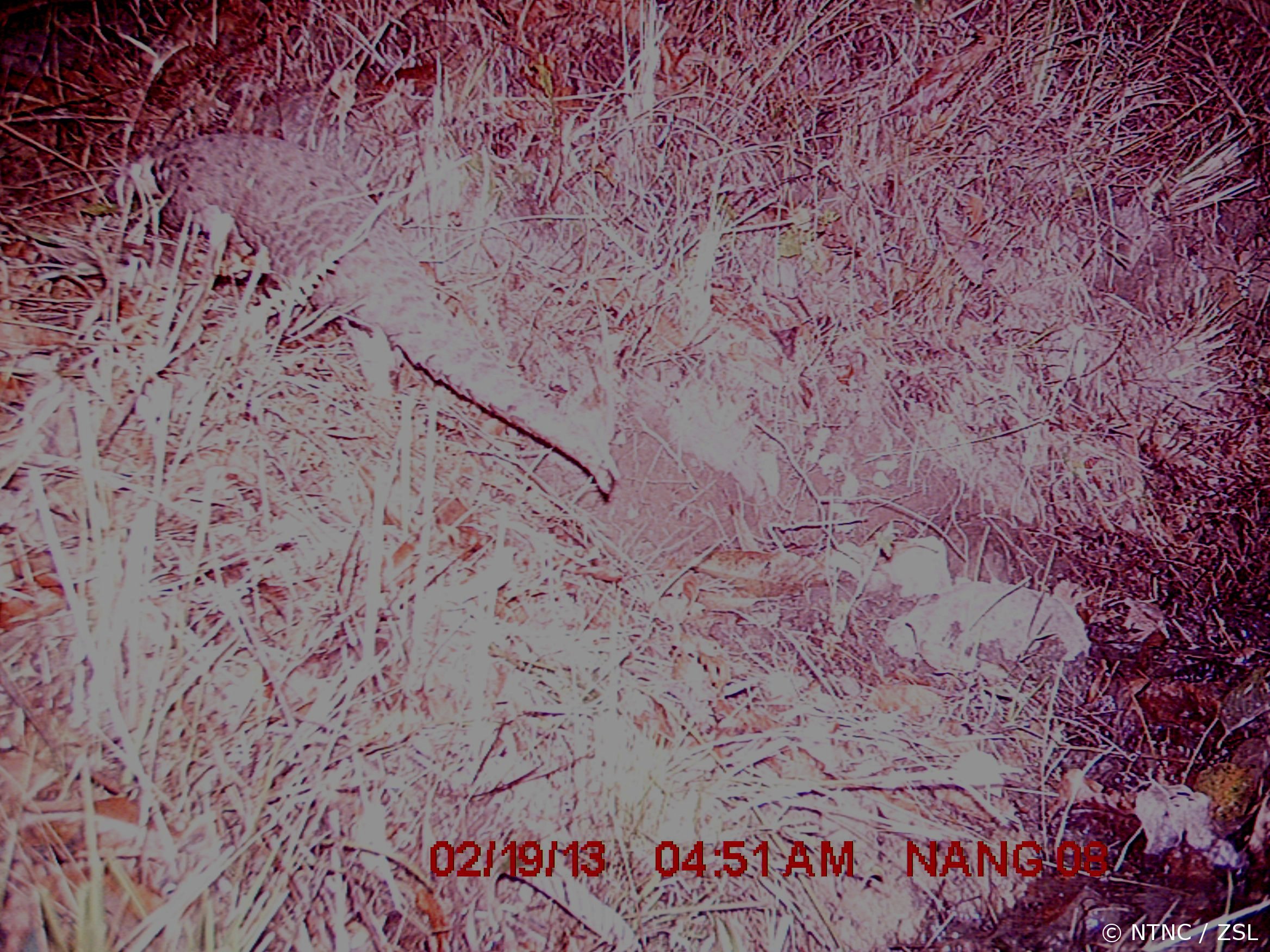 community knows to be good pangolin habitat. I’ve also started field surveys with my research assistants (Ms. Monsoon Pokharel and Mr. Kamal Bhusal) and local assistants (Mr. Nabin Khatiwada and Mr. Deepak Khatiwada); we’ve been walking through the forest measuring the burrows that we encounter and inspecting the surrounding area. We’ve found hundreds of burrows, both active and old, and most of these were in a cluster.

We’ve also been collecting information from the local community and it seems that, over the last 5 to 6 years, villagers have been becoming aware of the value of pangolin scales. Traders have been coming to the village offering money for pangolin scales. Locals search for pangolins when they’re in their burrows by making a fire in the burrow, pouring water down the burrow, inserting sharp pointed weapons into the burrows, and by digging the burrows up. Using these methods, results from key informants suggest that approximately 200 pangolins have been killed in the local area in the last 2 years.
Given these alarming figures, I have been focusing on building conservation awareness among the locals and schools students. For example, we arranged a school teaching programme for teachers and students in classes 6 to 12 to share information about the pangolin. We also tried to collect information from the students by holding an essay competition on the topic of “The role of youth in the conservation of the Chinese pangolin”. Being local residents, the student knew of the Chinese pangolin but they did not know that it was listed as Endangered by the IUCN or that it was of global conservation significance. This was our first step in building conservation awareness.
 We’ve also organized some group discussions with local villagers to create awareness and again collect local knowledge on the Chinese pangolin. Local attitudes are generally very positive and supportive of our conservation programme. Through these discussions we conveyed the message of the National Parks and Wildlife Conservation Act 2029, which states that anyone found to be involved in illegal pangolin related activity will be fined NRs. 75,000 (about £570) and / or imprisoned
  for 10 years. Hoarding boards have also been installed in key public gathering sites to reiterate these messages. Encouragingly, according to the locals, one trader who frequently visited Nangkholyang to collect pangolin scales was caught by Nepalese police a few months ago.
Armed with the information I had collected from the local community, I visited Taplejung District Headquarters where I gave a presentation about the Chinese pangolin to the Kangchenjunga Conservation Area Management Council, District Forest Office and some journalists. Being on the border with China and India, Taplejung is a key transit point for illegal traders so I focused my presentation on highlighting trade issues. After the presentation, I gave a 15 minute interview to the local radio station “Radio Taplejung” and the Nepali national daily “Gorkhapatra” also published news regarding our project.
This month is especially exciting because I’m going present my pangolin work at the Student Conference on Conservation Science (SCCS) in Cambridge, UK. Following the conference I’m going to spend a month at ZSL and thoroughly analyze all the data I’ve collected so far. I’m also going to work with key members of the IUCN Pangolin Specialist Group to ensure my work contributes to the global conservation of the Chinese pangolin.
To learn more about the EDGE Fellowship programme, please click here.