How Social Media is bringing the Maldives’ forgotten shark back into the spotlight
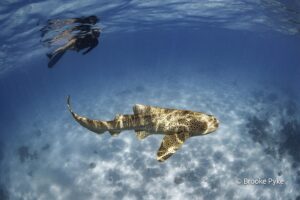
📷 Species: © Brooke Pyke
“You can’t protect what you don’t understand.”
It’s a phrase thrown around a lot in conservation circles, but for me, it became the exact reason an entire research project was born.
The Maldives is famous worldwide for its vibrant coral reefs, crystal-clear waters, and thriving shark populations. Our economy, culture, and very identity as an island nation are inseparable from the sea. Yet, despite living in a country that is 99% ocean, we still have massive blind spots right in our own backyard.
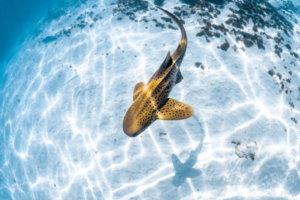
Meet the Indo-Pacific Leopard Shark (Stegostoma tigrinum).
Globally, they are listed as Endangered on the IUCN Red List and face steep declines due to overfishing and habitat loss. Yet here in the Maldives—one of the world’s ultimate marine sanctuaries—no one had ever made a dedicated effort to study them.
We didn’t know how many there were. We didn’t know where they preferred to spend their time. We didn’t know which bays or reefs were vital to their survival. Without those answers, protecting them was little more than guesswork.
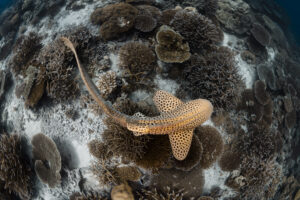
📷 Species: © Kayla Shortt
The Social Media Breakthrough
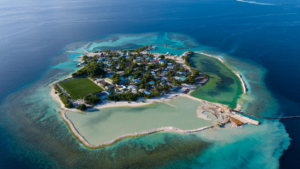
The spark for the Spot On Project didn’t happen during a high-tech marine expedition. It happened while I was scrolling through my phone.
Over a few months, I kept noticing gorgeous photos of leopard sharks being posted on Instagram and Facebook by local dive centres, tourists, and underwater photographers across the central Maldives. At first, they looked like isolated, lucky encounters. But as I kept scrolling, a pattern emerged.
These encounters weren’t rare anomalies. People were seeing leopard sharks far more often than anyone had officially documented.
At the same time, rapid coastal development, including dredging and land reclamation, was transforming the shallow lagoons these sharks call home. The clock was ticking, and the big question became impossible to ignore:
How do you protect a species when you don’t even have a baseline for understanding what we’re losing?
Every Shark Has a Fingerprint
That realisation launched the Spot On Project, supported by my ZSL EDGE Fellowship. Our goal is simple: to build the Maldives’ first-ever scientific baseline for leopard sharks.
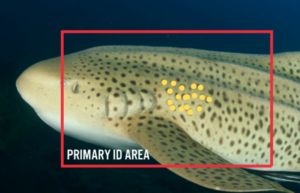
Luckily, these sharks give us a bit of help. No two leopard sharks look exactly alike. Each individual sports a totally unique pattern of spots that stays the same throughout its entire life, just like a human fingerprint.
By focusing our cameras on the left side of the shark (specifically the area right behind the gills), we can use non-invasive photo-identification. Every time a diver uploads a photo, we can check if it’s a familiar face returning to the same reef or a brand-new shark joining our database. We can track movement, habitat use, and population health without ever catching or stressing the animal.
Conservation is a Team Sport
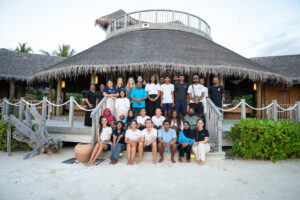
If there’s one thing I’ve learned, it’s that scientists working in isolation can only do so much. The real heroes of marine conservation are the people who spend every single day on the water.
Dive instructors, local fishers, and coastal communities see things that a small research team could miss in a lifetime. That’s why a massive pillar of the Spot On Project is building local capacity.
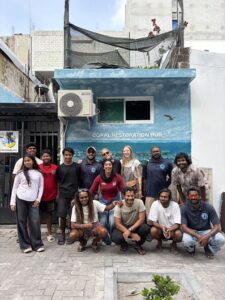
We run training workshops to turn local ocean lovers into citizen scientists. We teach participants about leopard shark ecology, how to interact responsibly with wildlife, and how to take data-grade photos for our national catalogue.
Why Citizen Science Changes the Game:
- More Eyes on the Water: Every diver with a camera becomes a researcher.
- Real-Time Data: Fishers can report sightings instantly, helping us map habitats faster than ever.
- Community Ownership: True conservation happens when the people who rely on the ecosystem are the ones who lead the charge to protect it.
The Big Picture: Why It Matters Now
The Maldives has rightfully earned its reputation as a global leader in shark conservation. But maintaining that legacy requires more than good intentions; it requires evidence.
As our islands continue to develop, we need data to advocate for our oceans. We need to be able to say, with scientific certainty, “This lagoon is a critical habitat for an endangered species.” Data becomes the shield that protects these places, turning conservation from good intentions into informed action.
The Spot On Project is still in its early chapters. But every photograph submitted, every survey completed, and every community partnership formed reminds us of something important: the Indo-Pacific Leopard Shark was never truly forgotten. We simply needed to start looking
What began with a few photographs shared on social media has grown into a nationwide effort to understand a species that has quietly existed beneath the surface all along. Every diver who pauses to take a photograph, every fisher who reports a sighting, and every community member who chooses to get involved helps transform isolated moments into scientific knowledge.
Because conservation doesn’t always begin with expensive technology or groundbreaking discoveries. Sometimes, it begins with curiosity. Sometimes, it begins with someone noticing a pattern while scrolling through their phone.
And sometimes, all it takes to change the future of an endangered species is for people to start paying attention.

Hamna Hussain Ali Didi
2025 EDGE Fellow